Blog

  • What is Google Ads

    What Is Google Ads? A Beginner’s Guide to Google’s Online Advertising Platform
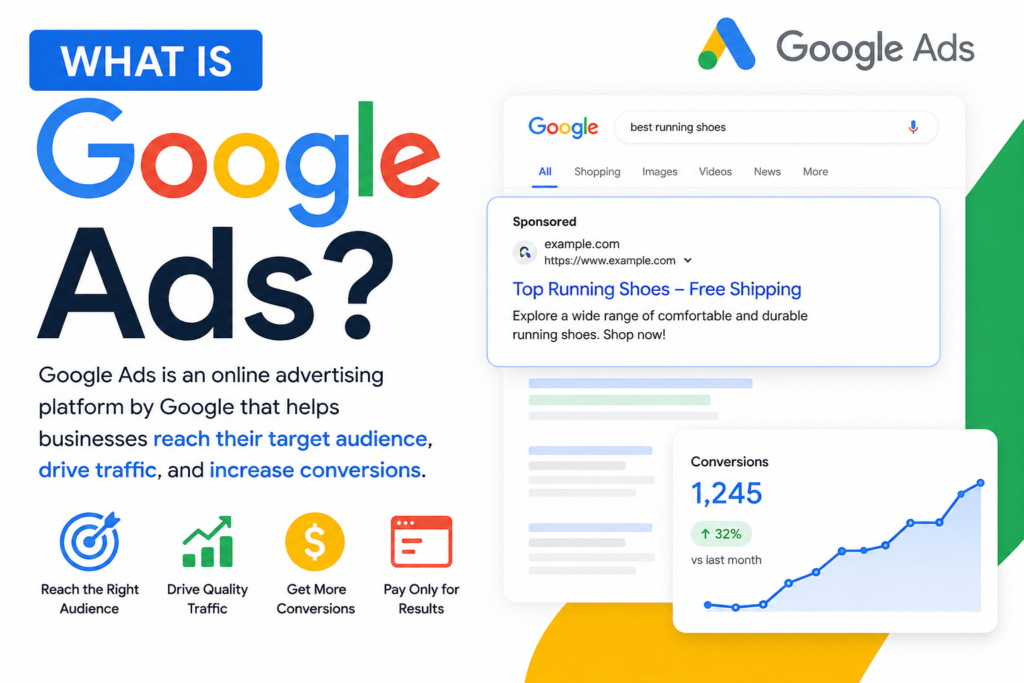
    What is Google Ads infographic explaining how Google Ads helps businesses reach target audiences, drive website traffic, generate leads, and increase conversions through pay-per-click (PPC) advertising.

    If you are wondering what is Google Ads and how businesses appear at the top of Google search results, you’re not alone. Google Ads is one of the most effective digital marketing platforms for reaching potential customers online. Whether you own a small business, run an eCommerce store, or want to build a career in digital marketing, understanding what is Google Ads can help you make smarter marketing decisions and generate better results.


    What Is Google Ads?

    Google Ads is Google’s online advertising platform that allows businesses to promote their products and services across Google Search, YouTube, Gmail, Google Maps, and millions of partner websites. It operates on a pay-per-click (PPC) model, where advertisers usually pay only when someone clicks on their ad.

    Businesses use Google Ads to:

    • Increase website traffic

    • Generate quality leads

    • Boost online sales

    • Improve brand awareness

    • Reach customers at the right time

    With Google Ads, advertisers can target users based on keywords, location, interests, device, language, and more.


    What Is Google Ads and How Does It Work?

    Google Ads works through an auction system. Every time a user searches for something on Google, advertisers who have selected related keywords compete for ad placement.

    Here’s how the process works:

    Keyword Selection

    Advertisers choose keywords that match what their target audience is searching for.

    Creating the Advertisement

    They create engaging ads with headlines, descriptions, and landing page links.

    Setting a Budget

    Businesses decide how much they want to spend daily or monthly.

    Google Ad Auction

    Google evaluates bids, ad quality, and expected user experience before deciding which ads appear.

    Ad Display

    The best-performing ads are shown to users based on relevance rather than just the highest bid.


    Types of Google Ads Campaigns

    Google Ads offers multiple campaign types for different marketing goals.
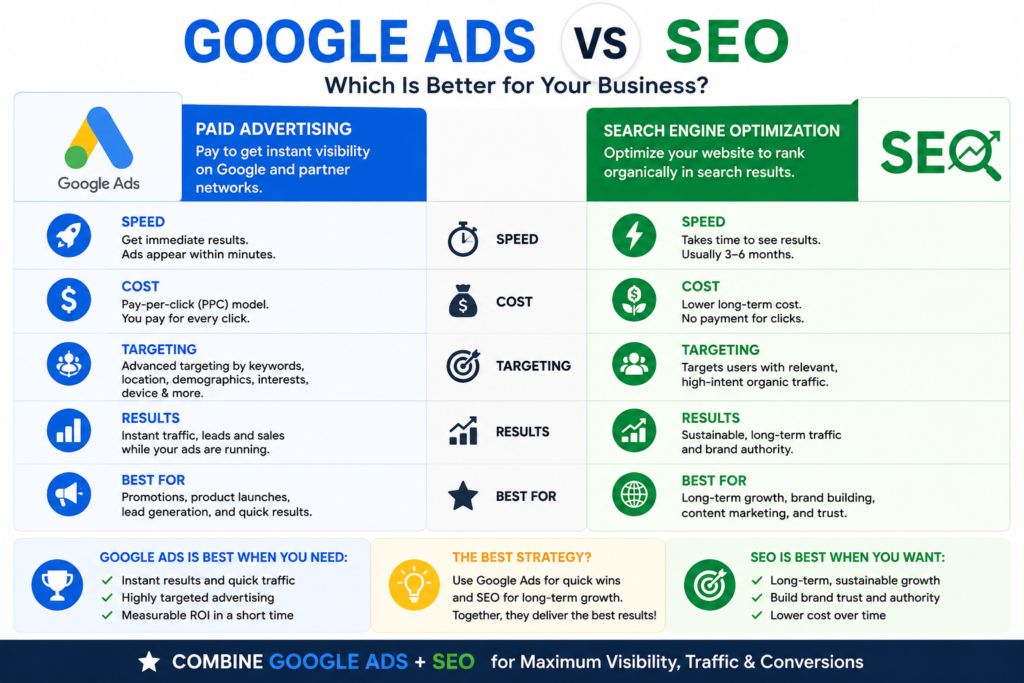
    Google Ads vs SEO infographic comparing paid search advertising and search engine optimization based on speed, cost, targeting, results, and the best use cases for businesses.

    Search Ads

    These text ads appear on Google Search results when users search for relevant keywords.

    Best for:

    • Lead generation

    • Service businesses

    • Local businesses


    Display Ads

    Display Ads use images and banners that appear across millions of websites in the Google Display Network.

    Best for:

    • Brand awareness

    • Remarketing

    • Product promotions


    Shopping Ads

    Shopping Ads display product images, prices, and store information directly in search results.

    Best for:

    • Online stores

    • Retail businesses


    Video Ads

    Video Ads are shown before, during, or after videos on YouTube.

    Best for:

    • Brand storytelling

    • Product launches

    • Customer engagement


    App Campaigns

    These campaigns help promote mobile applications across Google’s platforms.

    Best for:

    • App downloads

    • User engagement


    Performance Max Campaigns

    Performance Max uses Google’s AI to display ads across all Google channels from one campaign.

    Best for:

    • Businesses looking for automated optimization

    • Multi-channel marketing


    Benefits of Google Ads

    Businesses of every size use Google Ads because it offers measurable and flexible advertising solutions.

    Some major benefits include:

    • Instant visibility on Google

    • Highly targeted audience reach

    • Flexible advertising budgets

    • Measurable campaign performance

    • Fast lead generation

    • Improved return on investment (ROI)

    • Easy campaign optimization


    Why Businesses Use Google Ads

    Businesses invest in Google Ads because it connects them with customers who are actively searching for products or services.

    Common business goals include:

    • Increasing website traffic

    • Generating qualified leads

    • Boosting online sales

    • Promoting local businesses

    • Growing brand visibility

    • Expanding into new markets


    Google Ads Pricing: How Much Does It Cost?

    One of the biggest advantages of Google Ads is budget flexibility.

    The actual cost depends on factors such as:

    • Industry competition

    • Selected keywords

    • Quality Score

    • Target audience

    • Campaign objective

    • Geographic location

    There is no fixed minimum investment. Businesses can start with a small daily budget and increase spending as campaigns perform well.


    Google Ads vs SEO

    Although both help increase website visibility, they work differently.
    Google Ads vs SEO infographic comparing paid search advertising and search engine optimization based on speed, cost, targeting, results, and the best use cases for businesses.

    Google AdsSEO
    Paid marketingOrganic marketing
    Immediate resultsLong-term growth
    Budget requiredNo advertising cost
    Traffic stops when ads stopTraffic continues with rankings
    Faster testingTakes time to build authority

    Many successful businesses combine both Google Ads and SEO for better online visibility.


    Who Should Learn Google Ads?

    Learning Google Ads is valuable for:

    • Digital marketing students

    • Small business owners

    • Freelancers

    • Marketing professionals

    • Startup founders

    • eCommerce sellers

    • Agencies

    • Career changers

    It is one of the most in-demand digital marketing skills in today’s job market.


    Best Practices for Running Successful Google Ads Campaigns

    To improve campaign performance:

    • Research keywords carefully.

    • Write compelling ad copy.

    • Create relevant landing pages.

    • Use ad extensions.

    • Track conversions regularly.

    • Optimize campaigns based on performance data.

    • Test different headlines and descriptions.

    • Monitor your budget consistently.

    Regular optimization helps improve results while reducing unnecessary advertising costs.


    Common Mistakes to Avoid in Google Ads

    Many beginners make avoidable mistakes, including:

    • Choosing broad, irrelevant keywords

    • Ignoring negative keywords

    • Sending visitors to poor landing pages

    • Not tracking conversions

    • Using weak ad copy

    • Forgetting mobile optimization

    • Stopping campaigns too early without collecting enough data

    Avoiding these mistakes can significantly improve campaign performance.


    Conclusion

    Now that you understand what is Google Ads, it becomes easier to see why it is one of the most powerful online advertising platforms available today. From increasing website traffic and generating leads to boosting sales and building brand awareness, Google Ads offers businesses the opportunity to reach the right audience at the right time. By learning how campaigns work, choosing relevant keywords, and continuously optimizing performance, you can make the most of your advertising budget and achieve measurable business growth.


    Learn Google Ads with Vidya Sarthi Institute of Digital Education

    Ready to build a successful career in digital marketing or grow your business with Google Ads?

    At Vidya Sarthi Institute of Digital Education, you’ll gain practical, industry-focused training in Google Ads, SEO, social media marketing, content marketing, analytics, and other essential digital marketing skills. With hands-on projects, expert mentorship, and real-world campaign experience, you’ll be equipped to confidently manage advertising campaigns and achieve measurable results.

    Enroll today at Vidya Sarthi Institute of Digital Education and take the first step toward becoming a skilled digital marketer or growing your business through effective online advertising.
  • Elementor #119

    Why Local SEO is Important for Small Businesses in 2026

    Introduction

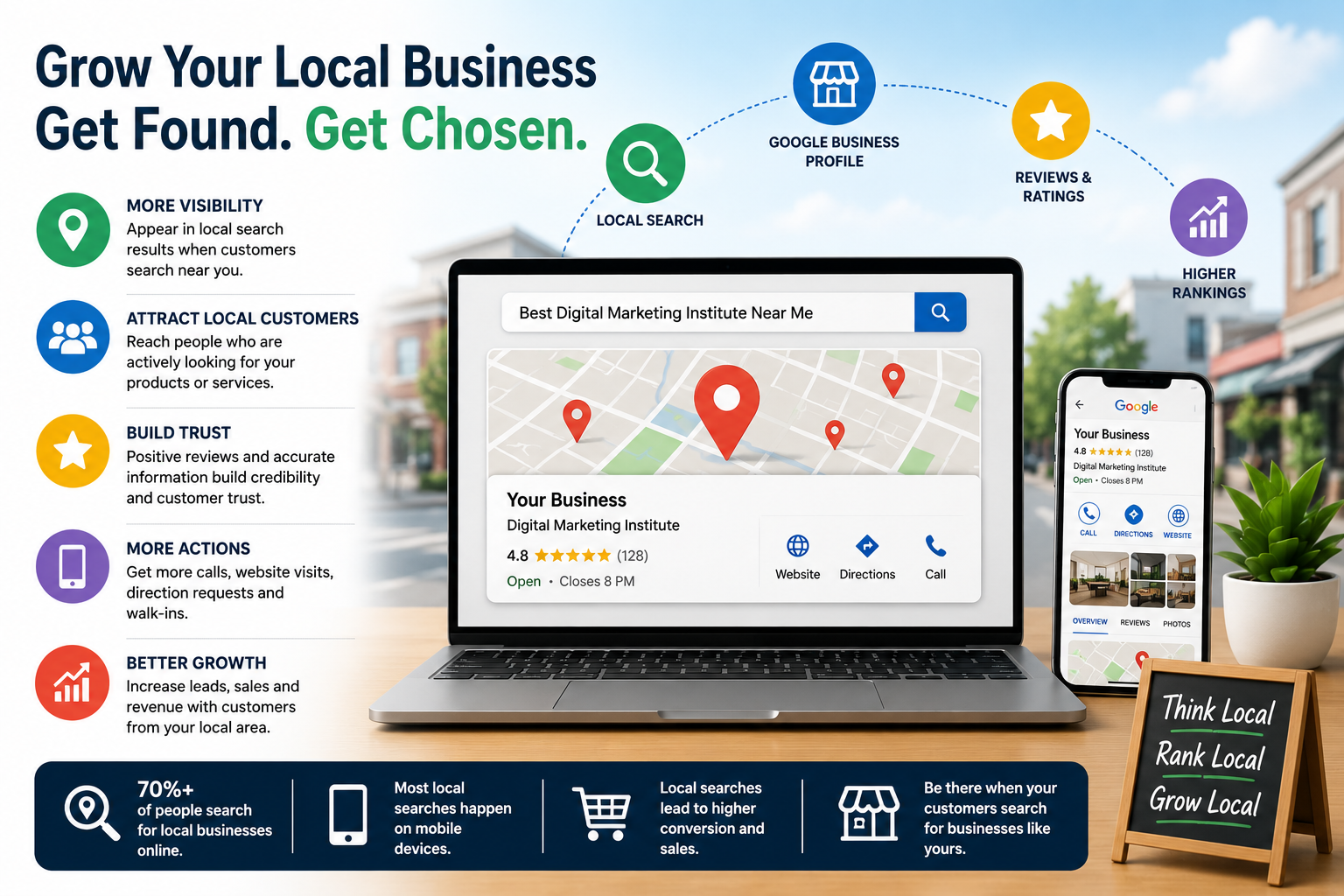
    In 2026, more people are using Google to find nearby businesses than ever before. Whether someone is looking for a restaurant, gym, coaching institute, salon, medical store, or repair service, their first step is usually searching online.

    If your business does not appear in local search results, you may lose many potential customers to your competitors.

    This is where Local SEO becomes important.

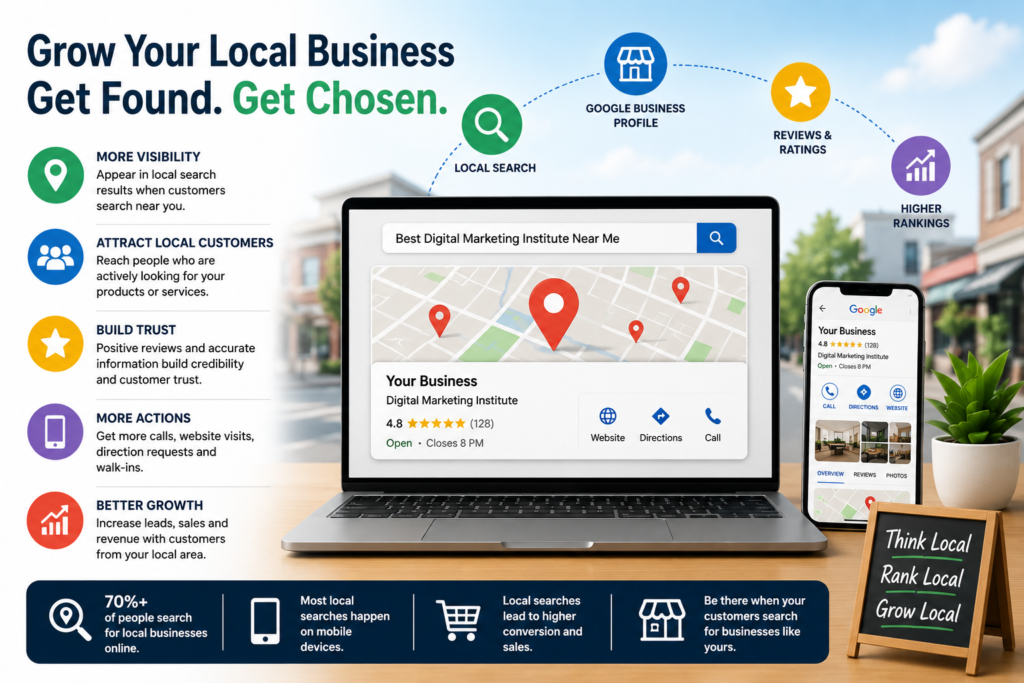
    Local SEO means optimizing your online presence so that your business appears when people search for products or services in a specific location. It helps small businesses become more visible, attract nearby customers, and grow their business.

    Let’s understand why Local SEO is important for small businesses in 2026.

    What is Local SEO?

    Local SEO stands for Local Search Engine Optimization.

    It is the process of improving your business’s online presence so that it appears in local search results on Google and other search engines.

    For example, when someone searches for “digital marketing institute near me” or “best bakery in Delhi,” Google shows businesses that are relevant to that location.

    The main goal of Local SEO is to help nearby customers easily find your business.

    Helps Customers Find Your Business Easily

    One of the biggest benefits of Local SEO is that it makes your business easier to find.

    Most customers search online before visiting a store or contacting a business.

    If your business appears at the top of local search results, customers are more likely to visit your website, call your business, or visit your location.

    This increases your chances of getting more customers without spending a huge amount on advertising.

    Increases Website Traffic

    A well-optimized local business listing encourages people to visit your website.

    When customers click on your website through Google Search or Google Business Profile, they can learn more about your products, services, pricing, and contact information.

    More website visitors often lead to more inquiries and sales.

    This is why Local SEO plays an important role in business growth.

    Builds Trust and Credibility

    Customers usually trust businesses that appear on the first page of Google.

    A strong Local SEO strategy includes accurate business information, customer reviews, updated contact details, and quality content.

    When people see positive reviews and complete business information, they feel more confident about choosing your business.

    Building trust is one of the most valuable benefits of Local SEO.

    Helps You Compete with Larger Businesses

    Many small business owners think only big companies can rank on Google.

    However, Local SEO gives small businesses the opportunity to compete with larger brands.

    Google focuses on showing the most relevant local businesses instead of only the biggest companies.

    With proper optimization, even a small business can appear above well-known brands in local search results.

    This creates more opportunities for growth.

    Increases Walk-In Customers

    Local SEO not only helps businesses online but also increases offline customers.

    Many people search for nearby businesses while they are ready to buy.

    If your business appears in those search results, customers can quickly get directions and visit your location.

    This helps increase foot traffic and improves overall sales.

    For local businesses, this can make a significant difference.

    Encourages Customer Reviews

    Customer reviews are an important part of Local SEO.

    Positive reviews improve your online reputation and encourage new customers to trust your business.

    Google also considers reviews while ranking local businesses.

    The more genuine positive reviews your business receives, the stronger your local visibility becomes.

    Good reviews also help businesses build long-term customer relationships.

    Improves Mobile Search Visibility

    Today, most local searches happen on smartphones.

    People search for businesses while traveling, shopping, or looking for nearby services.

    Local SEO helps businesses appear in these mobile search results.

    This makes it easier for customers to contact your business, get directions, or visit your website with just one click.

    As mobile usage continues to grow, Local SEO becomes even more valuable.

    Supports Other Digital Marketing Strategies

    Local SEO works even better when combined with other digital marketing strategies.

    A professional website, quality content, social media marketing, and Google Ads all support Local SEO efforts.

    When these strategies work together, businesses gain better online visibility and attract more potential customers.

    This creates a stronger digital presence and improves overall marketing performance.

    Provides Long-Term Benefits

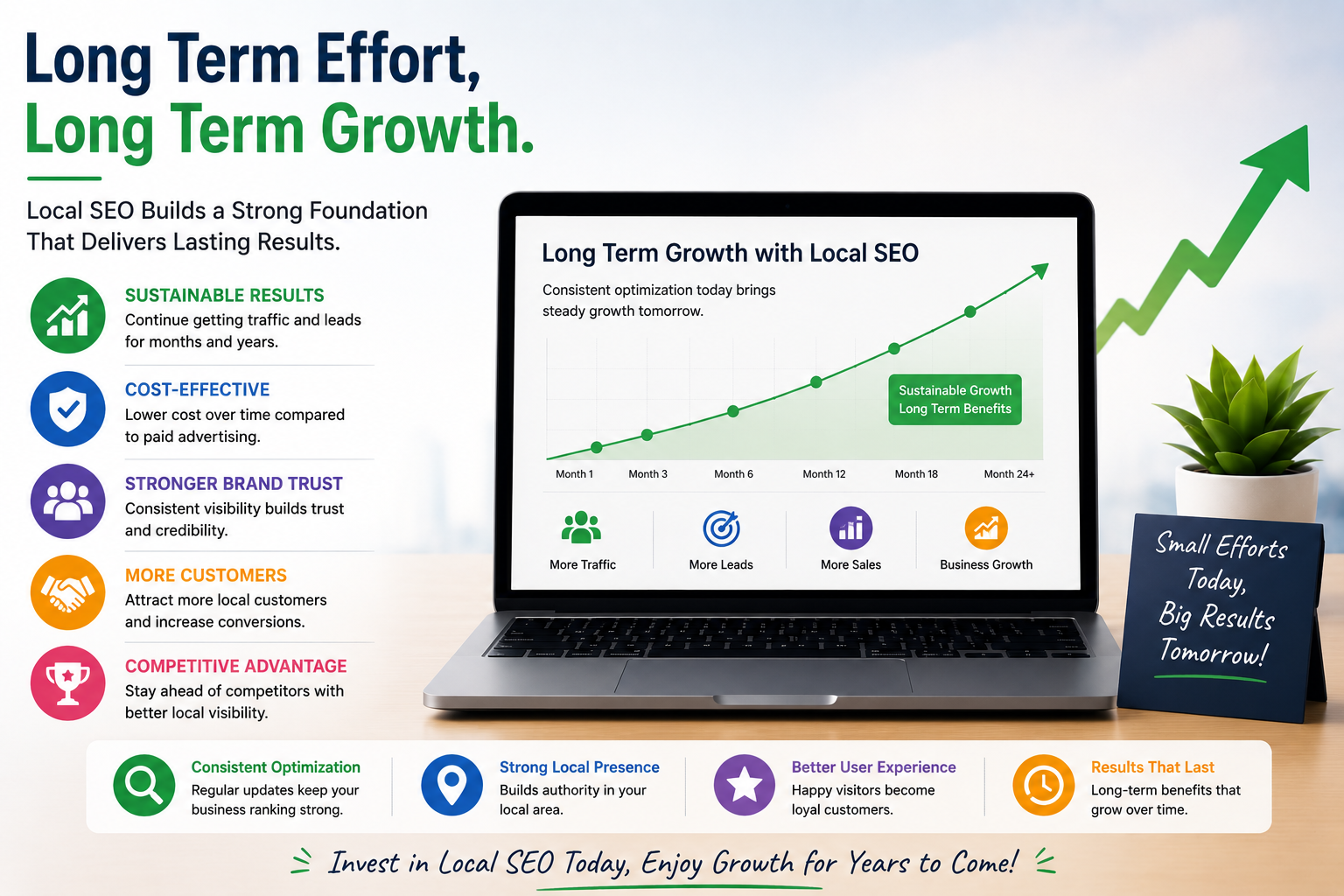
    Unlike short-term advertising campaigns, Local SEO provides long-term results.

    Once your business builds a strong local presence, it can continue attracting customers for months or even years with regular updates and optimization.

    This makes Local SEO one of the most cost-effective marketing strategies for small businesses.

    It helps businesses achieve sustainable growth without relying only on paid advertisements.

    Why Learning Local SEO is Important Today

    As more businesses compete online, Local SEO has become an essential digital marketing skill. Business owners, students, and professionals who understand Local SEO can help businesses improve their online visibility and attract more local customers.

    Learning how to optimize Google Business Profile, perform keyword research, manage customer reviews, and improve local search rankings can create excellent career and business opportunities.

    For those who want practical learning and industry-focused training, Vidya Sarthi Institute of Digital Education provides hands-on digital marketing education that helps learners understand Local SEO and other important digital marketing strategies used by businesses today.

    Conclusion

    Local SEO has become one of the most effective ways for small businesses to attract nearby customers and improve their online visibility. It helps businesses appear in local search results, build customer trust, increase website traffic, and generate more leads.

    As more people rely on Google to find nearby products and services, investing in Local SEO is no longer optional. It is an important step toward building a successful and sustainable business in 2026.

    Local SEO is most effective when it is part of a complete digital marketing strategy. To understand how different digital marketing techniques work together to help small businesses grow faster, read our blog on How Digital Marketing Helps Small Businesses Grow Faster.

  • Elementor #114

    How Social Media Marketing Helps Small Businesses Build Brand Awareness

    Introduction

    In today’s digital world, social media has become an important part of our daily lives. People spend hours every day on platforms like Facebook, Instagram, LinkedIn, YouTube, and X (formerly Twitter). They use these platforms to connect with friends, discover new products, learn about businesses, and make purchasing decisions.

    For small businesses, social media is more than just a platform for posting pictures and videos. It is a powerful marketing tool that helps businesses reach more people, build trust, and create brand awareness.

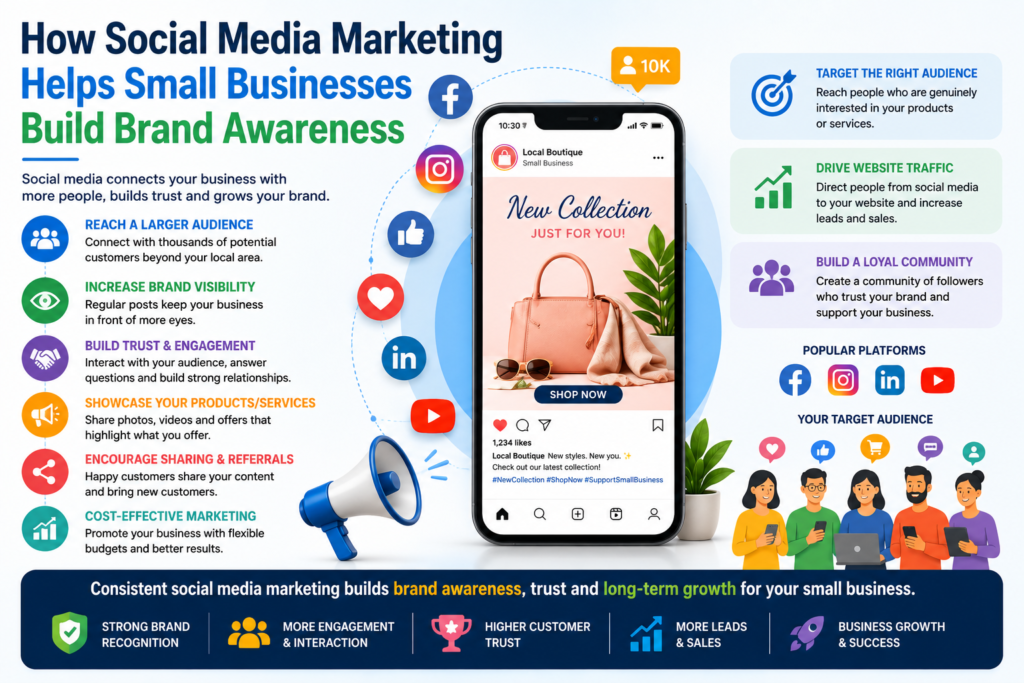
    Social media marketing means promoting a business through social media platforms and making people aware about the brand, its products, and the services it provides. When used correctly, social media marketing can help small businesses grow faster and establish a strong presence in the market.

    Let’s understand how social media marketing helps small businesses build brand awareness.

    What is Social Media Marketing?

    Social media marketing is the process of using social media platforms to promote a business, engage with customers, and share valuable content.

    Businesses create posts, videos, stories, advertisements, and other content to attract their target audience and encourage interaction.

    The goal of social media marketing is to increase visibility, build relationships, generate leads, and improve brand recognition.

    It allows businesses to connect with customers directly and create meaningful engagement.

    Helps Businesses Reach a Larger Audience

    One of the biggest advantages of social media marketing is its ability to reach a large audience.

    Traditional marketing methods often have geographical limitations. Social media allows businesses to connect with people from different cities, states, and even countries.

    A single post can reach hundreds or thousands of people within a short period of time.

    This wider reach helps small businesses introduce their brand to new audiences and attract potential customers.

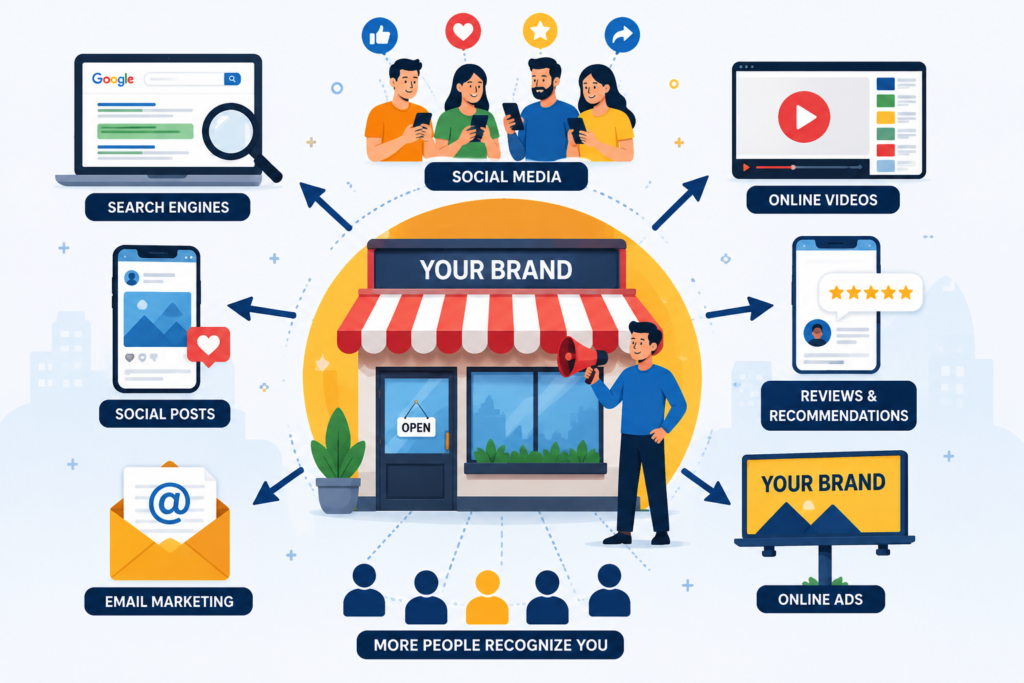
    Increases Brand Visibility

    The more people see a brand, the more familiar it becomes.

    Social media platforms give businesses the opportunity to appear regularly in front of their audience through posts, reels, stories, and advertisements.

    When customers repeatedly see a brand’s content, they begin to recognize the business and remember its name.

    Consistent visibility plays an important role in building brand awareness and increasing customer trust.

    Builds Trust Through Regular Engagement

    Customers prefer businesses that communicate with them and respond to their questions.

    Social media allows businesses to engage directly with their audience through comments, messages, polls, and discussions.

    When businesses actively interact with customers, it creates a sense of trust and reliability.

    People are more likely to choose brands that listen to their concerns and provide helpful information.

    This ongoing engagement helps strengthen customer relationships and improve brand reputation.

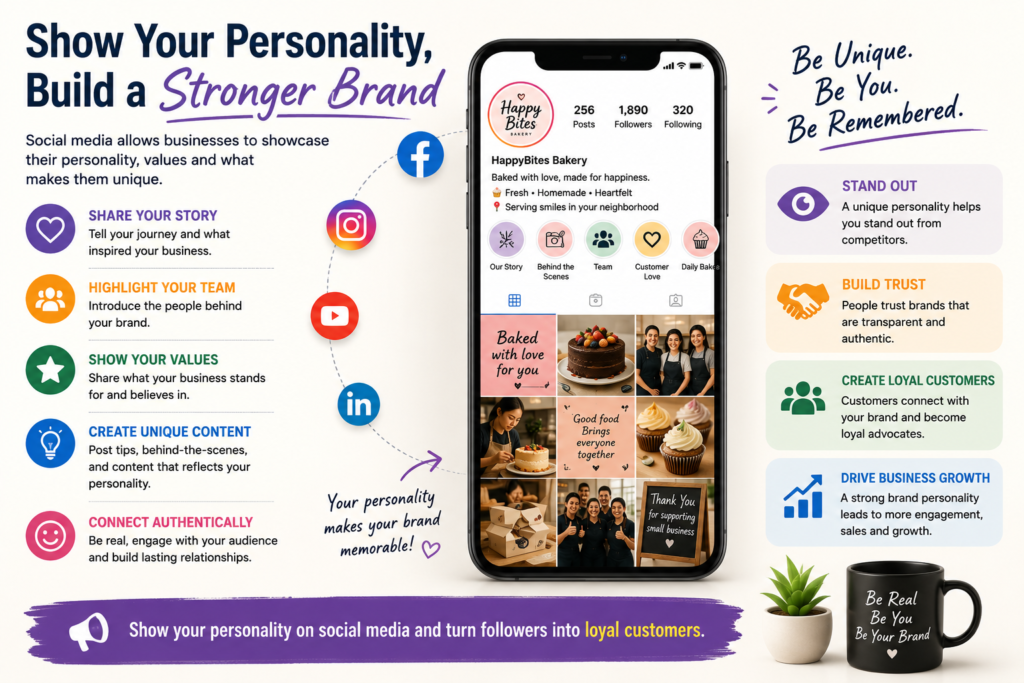
    Allows Businesses to Showcase Their Personality

    Every brand has its own identity and values.

    Social media provides a platform where businesses can showcase their personality, culture, and unique qualities.

    Through content, businesses can share their story, mission, achievements, and customer experiences.

    This helps customers connect with the brand on a personal level.

    A strong brand personality makes a business more memorable and different from its competitors.

    Encourages Word-of-Mouth Marketing

    People often share content they find useful, interesting, or entertaining.

    When customers like a business’s content, they may share it with friends, family members, and followers.

    This creates digital word-of-mouth marketing.

    As more people share the content, the brand reaches a larger audience without additional advertising costs.

    Word-of-mouth recommendations are highly valuable because people tend to trust suggestions from people they know.

    Helps Promote Products and Services

    Social media platforms provide businesses with an effective way to showcase their products and services.

    Businesses can share product photos, videos, customer testimonials, demonstrations, and special offers.

    This helps customers understand the value of what the business provides.

    Regular product promotion keeps the audience informed and increases the chances of attracting potential customers.

    Supports Customer Education

    Social media is not only about selling products.

    It is also about educating customers.

    Businesses can share useful tips, industry updates, how-to guides, and informative content related to their products or services.

    Educational content helps establish authority and positions the business as a trusted source of information.

    When customers find value in the content, they are more likely to follow and engage with the brand.

    Cost-Effective Marketing Solution

    Small businesses often have limited marketing budgets.

    Social media marketing offers affordable opportunities to promote products and services.

    Businesses can start by creating organic content without spending large amounts of money.

    Even paid advertising on social media platforms can be targeted to specific audiences, making it more cost-effective than many traditional advertising methods.

    This allows small businesses to maximize their marketing efforts while controlling costs.

    Helps Build a Loyal Community

    Successful brands often have loyal communities that support and promote them.

    Social media makes it easier to create and nurture these communities.

    By regularly sharing content and engaging with followers, businesses can build long-term relationships with their audience.

    Loyal followers are more likely to become repeat customers and recommend the brand to others.

    This contributes to long-term business growth and stronger brand awareness.

    Provides Valuable Customer Insights

    Social media platforms offer data and analytics that help businesses understand their audience.

    Business owners can track engagement, reach, audience demographics, and content performance.

    These insights help businesses identify what customers like and what type of content performs best.

    Understanding customer behavior allows businesses to improve their marketing strategies and achieve better results.

    Why Learning Social Media Marketing is Important Today

    As businesses continue to compete online, social media marketing has become one of the most valuable digital skills. Business owners, students, and professionals can benefit from learning how social media platforms work and how to use them effectively for marketing purposes.

    Skills such as content creation, audience targeting, social media advertising, and community management are highly demanded in today’s market.

    For those who want practical training and industry-relevant knowledge, Vidya Sarthi Institute of Digital Education provides learning opportunities that help students understand real-world social media marketing strategies and digital marketing concepts that businesses need to succeed online.

    Conclusion

    Social media marketing has become an essential tool for small businesses that want to build brand awareness and connect with their audience. It helps businesses increase visibility, build trust, promote products and services, engage with customers, and create long-term relationships.

    With billions of people using social media every day, businesses that actively use these platforms have a better chance of growing their brand and reaching more customers.

    However, social media marketing is only one part of a successful digital marketing strategy. To attract customers who are searching for products and services in specific locations, businesses also need to focus on local search visibility. To learn how local search can help businesses attract nearby customers and improve online visibility, read our blog on Why Local SEO is Important for Small Businesses in 2026.

  • Elementor #84

    Why Every Small Business Needs a Website in 2026

    Introduction

    In 2026, having a website is no longer a luxury for small businesses. It has become a necessity. Today, most customers search online before buying a product or using a service. They want to know about the business, check reviews, compare options, and find contact information before making a decision.

    If a business does not have a website, many potential customers may never discover it. Even if a business offers excellent products and services, it can lose opportunities simply because it is not visible online.

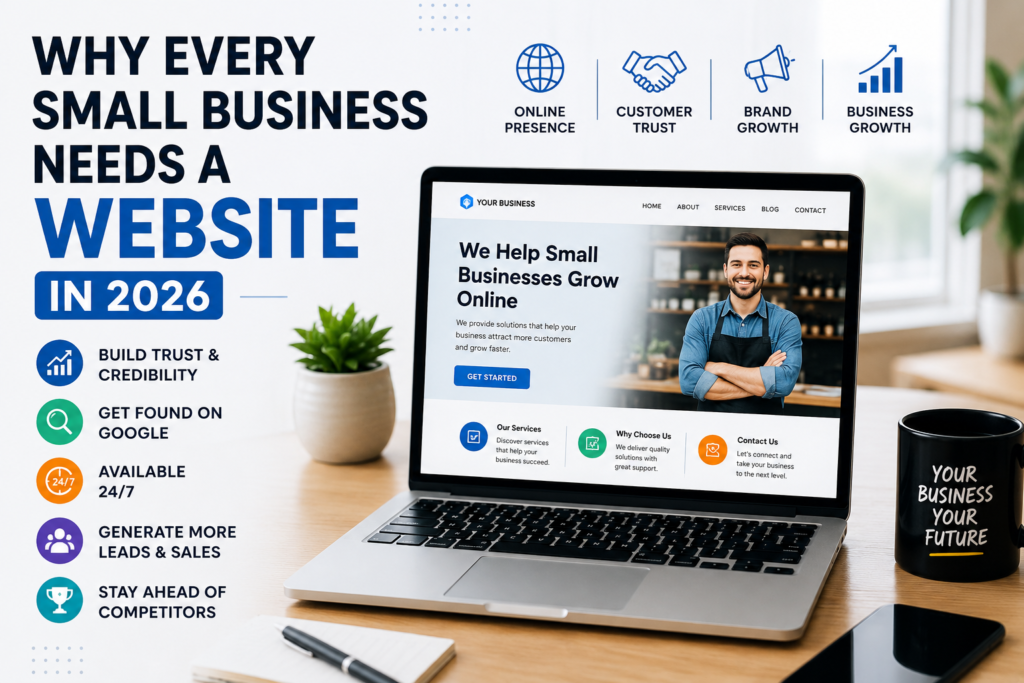
    A website acts like a digital shop that is open 24 hours a day and 7 days a week. It helps businesses build trust, attract customers, and grow faster. Let’s understand why every small business needs a website in 2026.

    A Website Makes Your Business Available Online

    The first reason every small business needs a website is visibility.

    When people search online for products or services, they expect businesses to have a website. If they cannot find one, they may think the business is not professional or trustworthy.

    A website allows customers to learn about your business anytime. Whether it is early morning or late at night, customers can visit your website and get information without waiting for business hours.

    This helps businesses stay connected with customers all the time.

    Builds Trust and Credibility

    Trust is one of the most important factors in business.

    Before purchasing something, customers want to know if a business is reliable. A professional website helps create a positive first impression.

    A website can showcase business information, customer reviews, services, products, achievements, and contact details. This information helps customers feel confident about choosing the business.

    In today’s digital world, many customers trust businesses with websites more than businesses without an online presence.

    Helps Customers Find Your Business on Google

    Most people use Google when they need information.

    Whether someone is looking for a restaurant, coaching institute, salon, repair service, or digital marketing company, they usually start with a Google search.

    A website helps your business appear in search results when customers search for related products or services.

    With proper SEO, your website can attract visitors who are actively looking for what you offer.

    This means more traffic, more inquiries, and more customers.

    Works as Your Digital Store

    A physical shop has opening and closing hours. A website does not.

    Your website continues to work even when you are sleeping, traveling, or spending time with family.

    Customers can browse products, read service details, submit inquiries, and contact your business at any time.

    This makes a website one of the most valuable assets for any small business.

    It allows businesses to serve customers around the clock without additional staff or expenses.

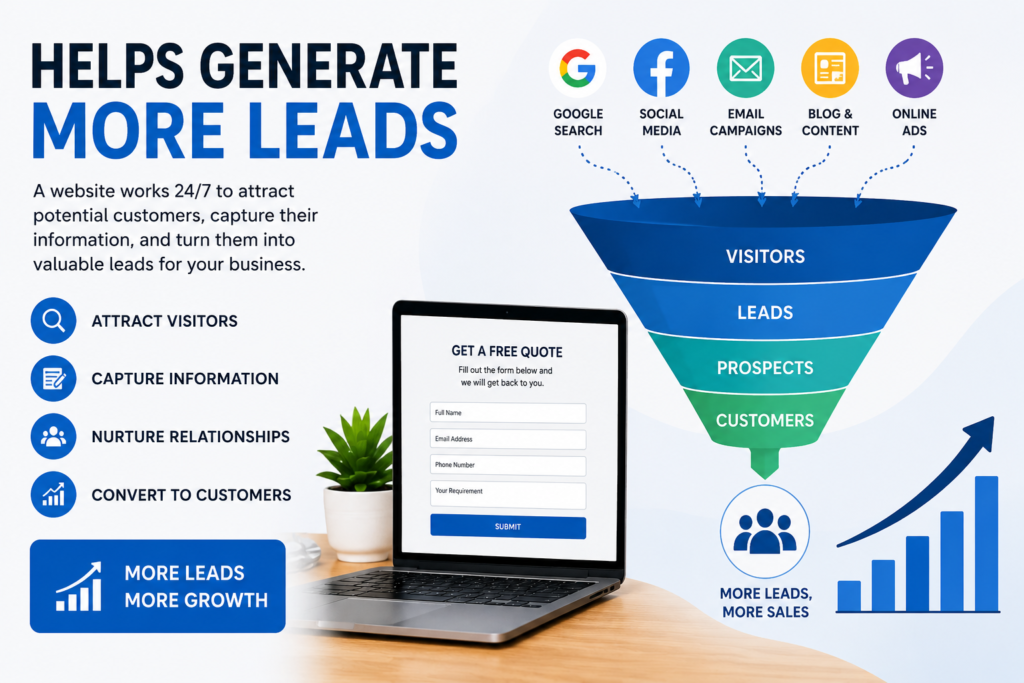
    Helps Generate More Leads

    Every business needs a steady flow of leads to grow.

    A website can help collect leads through contact forms, inquiry forms, newsletter subscriptions, and consultation requests.

    When customers visit your website and find useful information, they are more likely to contact your business.

    Instead of waiting for customers to walk into a physical store, businesses can generate leads online every day.

    This helps increase sales opportunities and business growth.

    Gives You a Competitive Advantage

    Many small businesses still rely only on traditional marketing methods.

    Having a professional website gives your business an advantage over competitors who are not online.

    Customers often compare multiple businesses before making a purchase decision. If your competitor has a website and you do not, customers may choose them simply because they can find more information online.

    A website helps you stay competitive and relevant in today’s market.

    Supports Digital Marketing Efforts

    Digital marketing becomes much more effective when a business has a website.

    Whether you are using SEO, social media marketing, Google Ads, content marketing, or email marketing, a website acts as the central destination for all marketing activities.

    Social media posts can direct people to your website. Google Ads can send visitors to service pages. Blog content can attract potential customers through search engines.

    Without a website, businesses miss many digital marketing opportunities.

    Showcases Products and Services Professionally

    A website allows businesses to present their products and services in a professional way.

    You can include detailed descriptions, images, videos, pricing information, and customer testimonials.

    This helps customers understand exactly what you offer before contacting you.

    The better customers understand your products and services, the easier it becomes for them to make purchasing decisions.

    A well-designed website can act as a powerful sales tool.

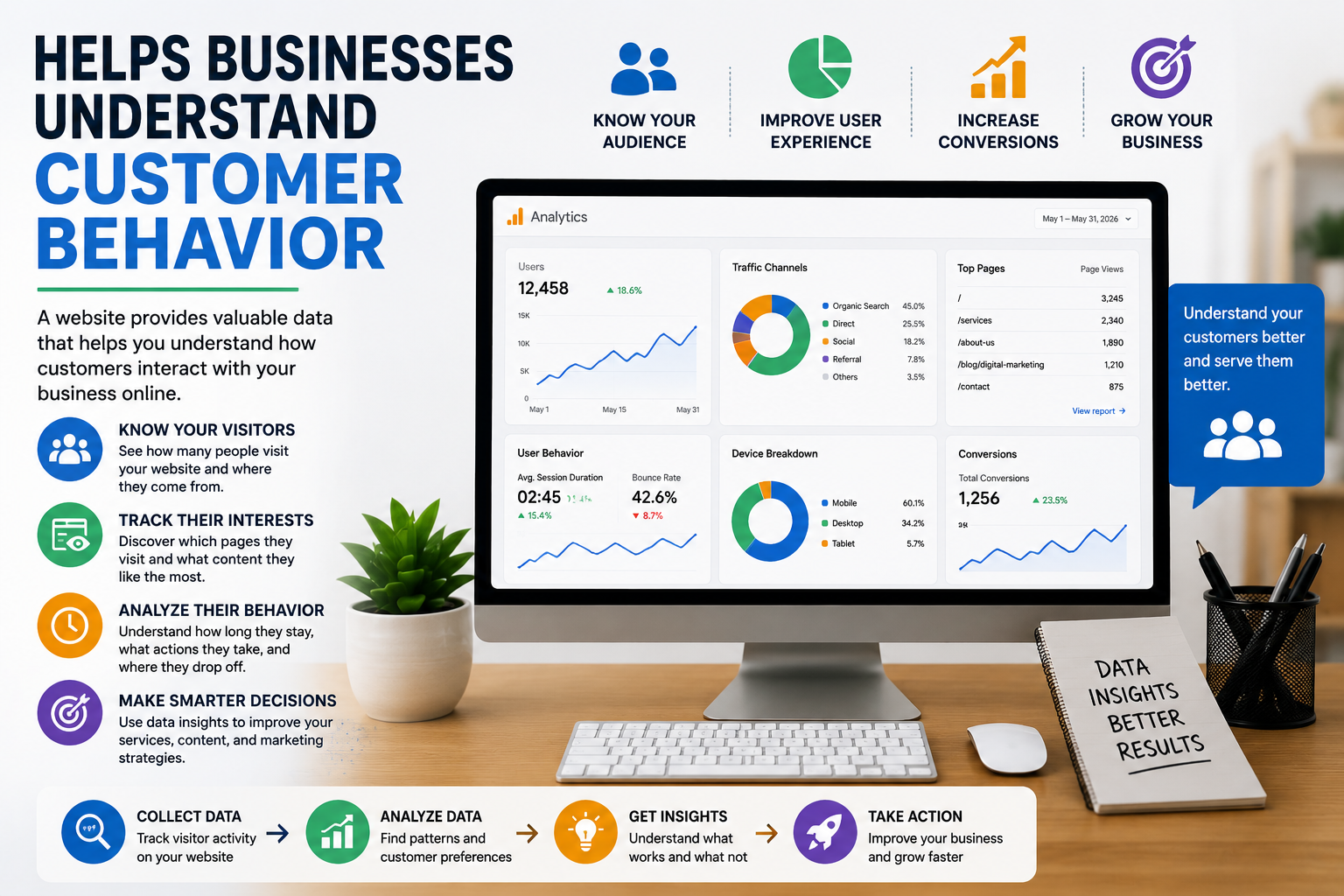
    Helps Businesses Understand Customer Behavior

    One major benefit of having a website is access to valuable customer data.

    Business owners can track how many people visit their website, which pages they view, how long they stay, and what actions they take.

    This information helps businesses understand customer interests and preferences.

    By analyzing this data, businesses can improve their marketing strategies and provide better customer experiences.

    This leads to smarter business decisions and better results.

    Supports Long-Term Business Growth

    A website is not just useful today; it is an investment for the future.

    As more people rely on the internet for information, the importance of websites will continue to grow.

    Businesses that establish a strong online presence now will have a better chance of succeeding in the future.

    A website helps create brand awareness, attract customers, generate leads, and support digital marketing efforts for years to come.

    This makes it an essential tool for long-term business growth.

    Why Learning Website and Digital Marketing Skills Matters

    As businesses continue moving online, the demand for website development and digital marketing skills is increasing rapidly. Business owners, students, and professionals can benefit from understanding how websites work and how digital marketing helps attract customers.

    Skills such as website management, SEO, content marketing, social media marketing, and Google Ads have become valuable in today’s market. Learning these skills can help individuals support business growth and create better career opportunities.

    For those who want practical knowledge and industry-focused training, Vidya Sarthi Institute of Digital Education provides learning opportunities that help students understand real-world digital marketing strategies and website-related concepts that businesses need in today’s competitive environment.

    Conclusion

    In 2026, a website is one of the most important tools for any small business. It helps businesses build trust, attract customers, generate leads, support digital marketing efforts, and stay competitive in the market.

    Customers expect businesses to be available online, and a website helps meet those expectations. It acts as a digital store, marketing platform, and communication channel all in one place.

    For small businesses that want to grow faster and create long-term success, having a professional website is no longer optional—it is essential. However, a website delivers even better results when it is supported by effective digital marketing strategies such as SEO, social media marketing, content marketing, and online advertising. To understand how these strategies help businesses attract more customers and achieve faster growth, read our blog on How Digital Marketing Helps Small Businesses Grow Faster.

    Customers expect businesses

  • Elementor #71

    How Digital Marketing Helps Small Businesses Grow Faster

    Introduction

    Running a small business is not easy. Every business owner wants more customers, more sales, and better growth. In the past, businesses used newspapers, banners, pamphlets, and word-of-mouth marketing to reach people. But today, most people spend their time online. They search on Google, watch videos on YouTube, and use social media platforms like Facebook and Instagram.

    This is where digital marketing becomes important.

    Digital marketing means bringing offline business to online business and making everyone aware about the brand and what services that brand provides to the public. It helps businesses connect with customers, increase visibility, and grow faster in a competitive market.

    Let’s understand how digital marketing helps small businesses achieve growth and success.

    What is Digital Marketing?

    Digital marketing is the process of promoting a business through online platforms such as websites, search engines, social media, email, and online advertisements.

    The main purpose of digital marketing is to help businesses reach the right audience, build trust, generate leads, and increase sales.

    Unlike traditional marketing, digital marketing allows businesses to connect with people anytime and from anywhere.

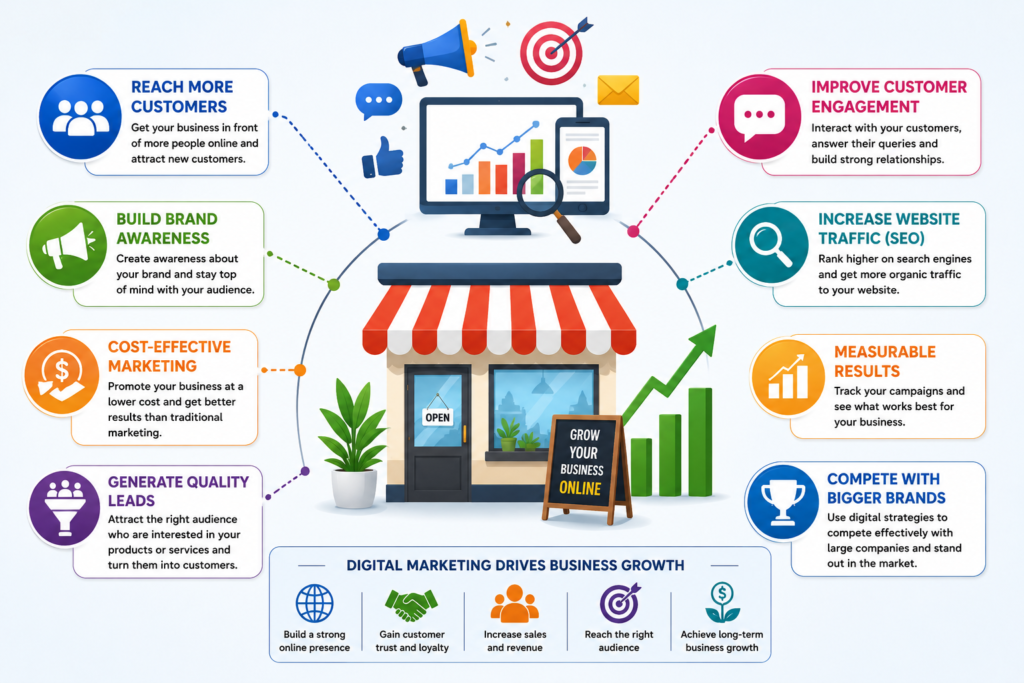
    Helps Businesses Reach More Customers

    One of the biggest advantages of digital marketing is that it helps businesses reach more customers.

    A local shop can only attract people who visit that area. But when the business has a website, social media pages, and Google visibility, people from different locations can learn about its products and services.

    The more people know about a business, the greater the chances of getting new customers.

    This wider reach helps small businesses grow faster than relying only on offline marketing methods.

    Builds a Strong Online Presence

    Today, customers often check online before making a purchase decision.

    They search for reviews, visit websites, and look at social media profiles before trusting a business.

    If a business is not available online, customers may choose a competitor instead.

    Digital marketing helps businesses create a strong online presence through websites, social media platforms, and search engine rankings.

    A strong online presence builds credibility and makes customers feel more confident about choosing the business.

    Increases Brand Awareness

    Many small businesses offer excellent products and services, but people do not know about them.

    Digital marketing helps businesses increase brand awareness by regularly appearing in front of potential customers.

    Through social media posts, blogs, videos, and online advertisements, businesses can continuously share information about their products and services.

    When people repeatedly see a brand online, they start recognizing and remembering it.

    This recognition helps businesses attract more customers and create long-term relationships.

    Cost-Effective Marketing for Small Businesses

    Small businesses usually have limited budgets.

    Traditional advertising methods such as television commercials, newspaper ads, and billboards can be expensive.

    Digital marketing offers affordable alternatives that can deliver better results.

    Businesses can start with social media marketing, content marketing, and SEO without spending huge amounts of money.

    Even a small investment in digital marketing can help generate leads and increase sales.

    This makes it one of the most cost-effective marketing solutions available today.

    Helps Generate Quality Leads

    Every business needs leads because leads can become customers.

    Digital marketing helps businesses attract people who are already interested in their products or services.

    For example, if someone searches on Google for “best digital marketing course” or “best bakery near me,” they are actively looking for a solution.

    When a business appears in those search results, the chances of getting a lead become much higher.

    This targeted approach helps businesses connect with the right audience and improve conversions.

    Improves Customer Communication

    Good communication is important for every business.

    Digital marketing allows businesses to interact directly with customers through social media messages, comments, emails, and website contact forms.

    Customers can ask questions, provide feedback, and receive support quickly.

    This communication builds trust and strengthens relationships.

    When customers feel valued and heard, they are more likely to stay loyal to the brand.

    Helps Businesses Compete with Bigger Brands

    Many small business owners believe that large companies have an advantage because they have bigger budgets.

    However, digital marketing gives small businesses the opportunity to compete effectively.

    A well-optimized website, useful content, positive customer reviews, and active social media profiles can help a small business attract customers just like larger companies.

    Customers often prefer businesses that provide value and good service rather than simply choosing the biggest brand.

    Digital marketing allows small businesses to showcase their strengths and stand out from competitors.

    Provides Measurable Results

    One of the best things about digital marketing is that businesses can measure their performance.

    Business owners can track website visitors, social media engagement, ad performance, and customer inquiries.

    This data helps them understand what is working and where improvements are needed.

    Instead of spending money without knowing the results, businesses can make better decisions based on real information.

    This helps improve marketing strategies and achieve better outcomes.

    Supports Long-Term Growth

    Digital marketing is not only about getting quick results.

    It also helps businesses build a strong foundation for long-term success.

    A website, blog, social media presence, and SEO strategy continue to generate value over time.

    As more people discover and trust the business online, growth becomes more consistent and sustainable.

    This long-term approach helps businesses remain competitive and successful in the future.

    Conclusion

    Digital marketing has changed the way businesses connect with customers. It helps small businesses reach more people, increase brand awareness, generate quality leads, improve customer relationships, and increase sales.

    In today’s digital world, having an online presence is no longer optional. Businesses that use digital marketing effectively can grow faster and create more opportunities for success.

    For small businesses looking to expand their reach and achieve long-term growth, digital marketing is one of the most powerful tools available.

    However, digital marketing strategies work best when they are supported by a strong online presence. One of the most important foundations of that online presence is a professional website, which helps businesses showcase their products, build trust, and connect with customers more effectively. This is why understanding Why Every Small Business Needs a Website in 2026 is equally important for businesses that want to succeed online.

    Start Your Digital Marketing Journey Today

    As businesses continue to move online, the demand for digital marketing skills is growing rapidly. Whether you want to promote your own business or build a successful career, learning digital marketing can open many opportunities.

    To gain practical knowledge and understand how real digital marketing strategies work, choosing the right learning institute is important. Vidya Sarthi Institute of Digital Education focuses on practical learning, industry-relevant skills, and hands-on training that helps students understand the real world of digital marketing.

    If you want to become a part of the growing digital industry and build a successful future, now is the perfect time to start your learning journey with the right guidance and training.

  • Hello world!

    Welcome to WordPress. This is your first post. Edit or delete it, then start writing!