How Social Media Marketing Helps Small Businesses Build Brand Awareness
Introduction
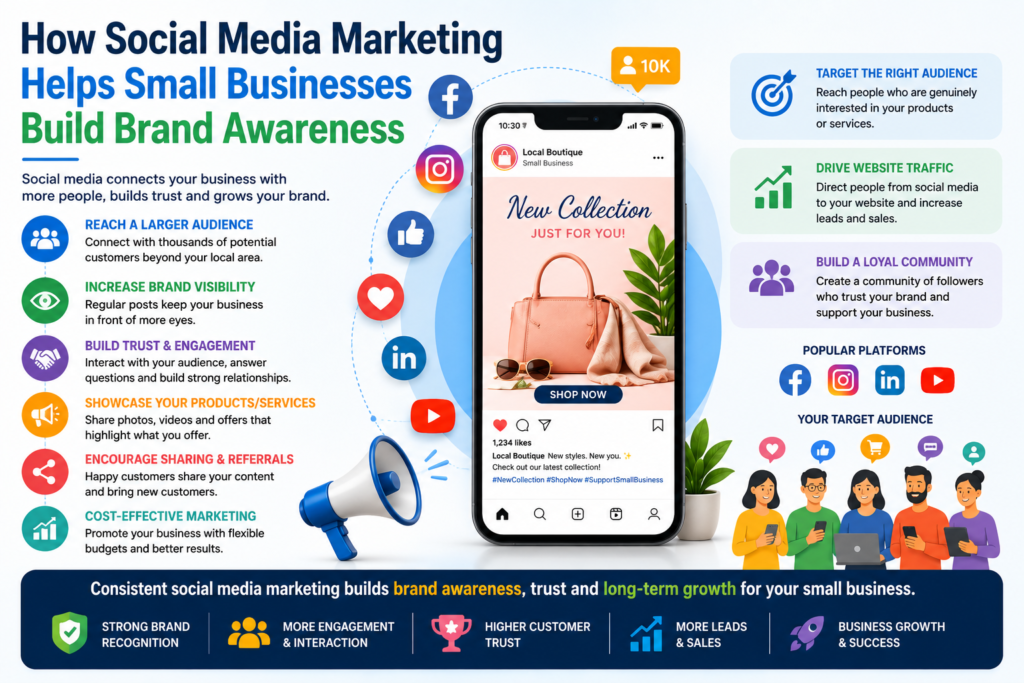
In today’s digital world, social media has become an important part of our daily lives. People spend hours every day on platforms like Facebook, Instagram, LinkedIn, YouTube, and X (formerly Twitter). They use these platforms to connect with friends, discover new products, learn about businesses, and make purchasing decisions.
For small businesses, social media is more than just a platform for posting pictures and videos. It is a powerful marketing tool that helps businesses reach more people, build trust, and create brand awareness.
Social media marketing means promoting a business through social media platforms and making people aware about the brand, its products, and the services it provides. When used correctly, social media marketing can help small businesses grow faster and establish a strong presence in the market.
Let’s understand how social media marketing helps small businesses build brand awareness.
What is Social Media Marketing?
Social media marketing is the process of using social media platforms to promote a business, engage with customers, and share valuable content.
Businesses create posts, videos, stories, advertisements, and other content to attract their target audience and encourage interaction.
The goal of social media marketing is to increase visibility, build relationships, generate leads, and improve brand recognition.
It allows businesses to connect with customers directly and create meaningful engagement.
Helps Businesses Reach a Larger Audience
One of the biggest advantages of social media marketing is its ability to reach a large audience.
Traditional marketing methods often have geographical limitations. Social media allows businesses to connect with people from different cities, states, and even countries.
A single post can reach hundreds or thousands of people within a short period of time.
This wider reach helps small businesses introduce their brand to new audiences and attract potential customers.
Increases Brand Visibility
The more people see a brand, the more familiar it becomes.
Social media platforms give businesses the opportunity to appear regularly in front of their audience through posts, reels, stories, and advertisements.
When customers repeatedly see a brand’s content, they begin to recognize the business and remember its name.
Consistent visibility plays an important role in building brand awareness and increasing customer trust.
Builds Trust Through Regular Engagement
Customers prefer businesses that communicate with them and respond to their questions.
Social media allows businesses to engage directly with their audience through comments, messages, polls, and discussions.
When businesses actively interact with customers, it creates a sense of trust and reliability.
People are more likely to choose brands that listen to their concerns and provide helpful information.
This ongoing engagement helps strengthen customer relationships and improve brand reputation.
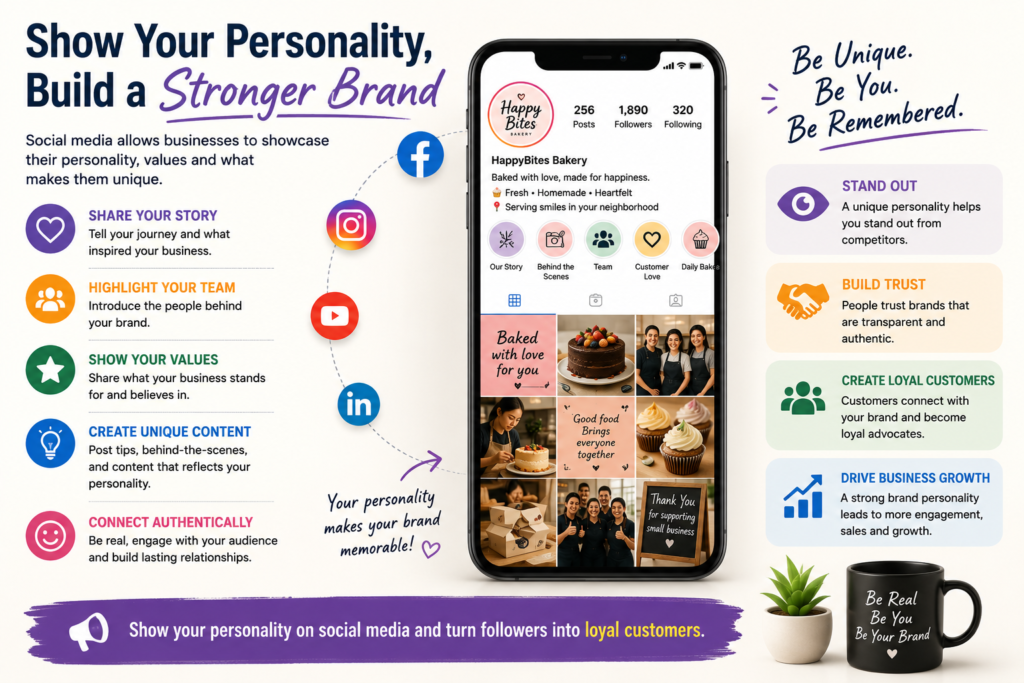
Allows Businesses to Showcase Their Personality
Every brand has its own identity and values.
Social media provides a platform where businesses can showcase their personality, culture, and unique qualities.
Through content, businesses can share their story, mission, achievements, and customer experiences.
This helps customers connect with the brand on a personal level.
A strong brand personality makes a business more memorable and different from its competitors.
Encourages Word-of-Mouth Marketing
People often share content they find useful, interesting, or entertaining.
When customers like a business’s content, they may share it with friends, family members, and followers.
This creates digital word-of-mouth marketing.
As more people share the content, the brand reaches a larger audience without additional advertising costs.
Word-of-mouth recommendations are highly valuable because people tend to trust suggestions from people they know.
Helps Promote Products and Services
Social media platforms provide businesses with an effective way to showcase their products and services.
Businesses can share product photos, videos, customer testimonials, demonstrations, and special offers.
This helps customers understand the value of what the business provides.
Regular product promotion keeps the audience informed and increases the chances of attracting potential customers.
Supports Customer Education
Social media is not only about selling products.
It is also about educating customers.
Businesses can share useful tips, industry updates, how-to guides, and informative content related to their products or services.
Educational content helps establish authority and positions the business as a trusted source of information.
When customers find value in the content, they are more likely to follow and engage with the brand.
Cost-Effective Marketing Solution
Small businesses often have limited marketing budgets.
Social media marketing offers affordable opportunities to promote products and services.
Businesses can start by creating organic content without spending large amounts of money.
Even paid advertising on social media platforms can be targeted to specific audiences, making it more cost-effective than many traditional advertising methods.
This allows small businesses to maximize their marketing efforts while controlling costs.
Helps Build a Loyal Community
Successful brands often have loyal communities that support and promote them.
Social media makes it easier to create and nurture these communities.
By regularly sharing content and engaging with followers, businesses can build long-term relationships with their audience.
Loyal followers are more likely to become repeat customers and recommend the brand to others.
This contributes to long-term business growth and stronger brand awareness.
Provides Valuable Customer Insights
Social media platforms offer data and analytics that help businesses understand their audience.
Business owners can track engagement, reach, audience demographics, and content performance.
These insights help businesses identify what customers like and what type of content performs best.
Understanding customer behavior allows businesses to improve their marketing strategies and achieve better results.
Why Learning Social Media Marketing is Important Today
As businesses continue to compete online, social media marketing has become one of the most valuable digital skills. Business owners, students, and professionals can benefit from learning how social media platforms work and how to use them effectively for marketing purposes.
Skills such as content creation, audience targeting, social media advertising, and community management are highly demanded in today’s market.
For those who want practical training and industry-relevant knowledge, Vidya Sarthi Institute of Digital Education provides learning opportunities that help students understand real-world social media marketing strategies and digital marketing concepts that businesses need to succeed online.
Conclusion
Social media marketing has become an essential tool for small businesses that want to build brand awareness and connect with their audience. It helps businesses increase visibility, build trust, promote products and services, engage with customers, and create long-term relationships.
With billions of people using social media every day, businesses that actively use these platforms have a better chance of growing their brand and reaching more customers.
However, social media marketing is only one part of a successful digital marketing strategy. To attract customers who are searching for products and services in specific locations, businesses also need to focus on local search visibility. To learn how local search can help businesses attract nearby customers and improve online visibility, read our blog on Why Local SEO is Important for Small Businesses in 2026.